Showing posts with label background. Show all posts

Wednesday, 16 November 2011

The Spirit of Dungeonpunk 1894

Spiked Armour | John Dickson Batten | 1894


The Lambton Worm

'But hear me, and mark me well. Thou, and thou alone, canst kill the Worm. But, to this end, go thou to the smithy and have thy armour studded with spear-heads'...
'This I will do,' said Childe Lambton.
Joseph Jacobs, More English Fairy Tales 


Yes, that's not a typo. 1894, not 1984. Spiked armour is often cited as one of the key signifiers of Dungeonpunk and as a fantasy trope is over 100 years old.  If going fishing and swearing on a Sunday is any indication of alignment (which it surely was in 1894) then Childe Lambton was no doubt one of the original Warriors of Chaos.

Wednesday, 21 September 2011

in the 21st Age of Middle Earth...

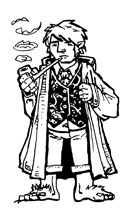
...in a hole in the ground there lived a hobbit. Not a nasty, dirty, wet hole, filled with the ends of worms and an oozy smell, nor yet a dry, bare, sandy hole with nothing in it to sit down on or to eat: it was a hobbit-hole, and that means comfort.


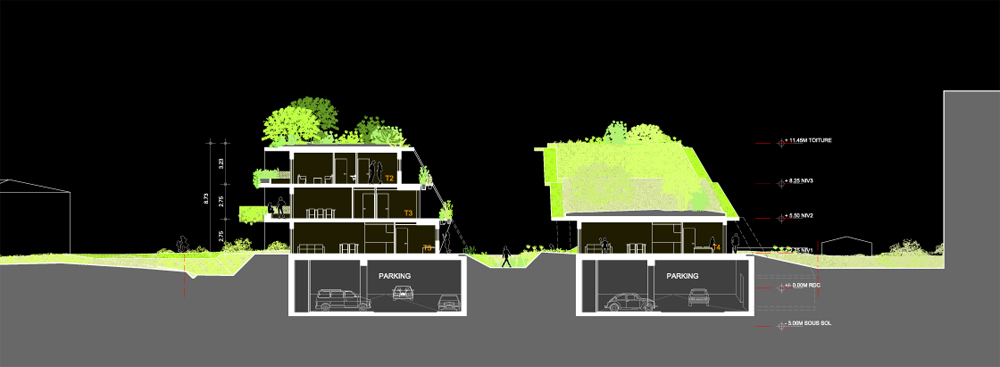
images from both the jean moulin high school project (2009) and logements anglet (2011)


There are exists here to: OFF ARCHITECTS. Thorin sits down and sings of gold.

Saturday, 5 February 2011

Cwichelmslaewe Barrow

Silent and lonely, the ancient road pursues its course over height and into hollow :  now stretching away in a generous curve sharply defined by a bank on either side, now scarcely to be distinguished from the surrounding turf. At intervals are earthworks that guard it and barrows that keep watch.   
Illustration L Leslie Brookes
Round one of the latter, familiarly called the "Knob," not a few curious legends have gathered.  Some distance below the old road there runs, also from east to west, a military ditch and vellum, and the story goes that the devil, having a fancy to turn ploughman, cleft this mighty furrow along the hillside. When he arrived opposite the spot where the barrow now stands, his ploughshare became clogged; he halted to clean it, and the soil which he scraped off he tossed over the Ridgeway in a heap to be known henceforth as the Knob. There is a lavishness about this proceeding which can only be properly appreciated by those who have seen the mound and the Devil's Dyke.

The tale was told to me by a native of the district who had heard it when a boy, from the older labourers working on his father's farm. Local opinion however, differed on the subject. While some people believed the Knob was due to His Satanic Majesty's industry, others possessing more education, maintained it was a genuine tumulus raised above the body of Cwichelm, king of the West Saxons; and yet a third party claimed that it was composed of the bodies of this king's soldiers, slain hereabouts in some great battle. So prevalent was this last belief that the owner of the land, who was a thrifty soul, cut into the mound and drew off several hundred loads of soil under the impression that it contained valuable fertilising qualities. The informant to whom I am indebted for the above traditions, well remembers seeing the farm carts coming and going on their foolish errand, and the sensation created in the neighbourhood by this wanton destruction of the barrow. Its poor remains can still be viewed a monument no longer of a dead chieftain or his forgotten host, but of man's credulity and ignorance."
~ Eleanor G. Hayden - Travels Round Our Village (1905)


5 adventure ideas around the Wych-helm* Barrow:

  1. A giant (or perhaps demon) has been spotted ploughing up the highlands (perhaps armed with item 3 below). Afeared of an invasion by giant-kind, the adventurers are hired by the local villagers to get rid the land of him.


  2. Haunted by spectral visitations of long-dead kings, the greedy Landowner hires the adventurers to protect him and release him from his curse.


  3. The Landowner hires the adventurers to protect his wagons carrying the magically fertile soil cut from the Barrrow after some 'unfortunate accidents' and 'mysterious disappearances'. Undead soldiers begin to arrise from the accursed soil and wreak vengeance upon the living for the desecration of their grave.


  4. Guarding a merchant caravan down an ancient road, the adventurers have an unnerving feeling of being watched, passing by "The Knob" they are approached by a soldier in ancient uniform and told they cannot pass.


  5. Rumours of ancient kings and devils-work surround the Barrow, is this just the idle talk of half-drunk yokel halflings? may there be a Kings ancient treasure hoard beneath the mound or is it truly just the lair of a Giant MoleTM?

3 items:

  1. Soil of the Ancestors - this is a wax-sealed jar containing cursed soil from the Wycheshelm Barrow, placing the soil on the ground will summon 2D6 -4 (there is a chance of failure) skeletons, who will proceed to attack the nearest living creature.

  2. Blood of the Land - this is a wax-sealed jar containing blessed soil from the Wycheshelm Barrow, placing the soil on the ground will cause any living plants to grow to twice its natural size in 1D6 days.

  3. The Ploughshare of His Satanic Majesty - this is an immense, rusted iron blade as tall as a man and as wide as a dwarf.  Encrusted with peculiar signs and symbols wield-able only by those of Ogre size or greater strength. Upon the weapon lays a curse, anyone attempting to wield it will be forced to walk 100 miles and plough an acre of land. Once the land is tilled, and grain sown upon it, next growing season a crop of gold will arise (1 acre = 2000gp). The gold will bring ill fortune to any that keep it.  If molten down, up to 23 swords may be forged from the original ploughshare, each will be +1 cursed, berserk inducing, intelligent blade until the first 100 souls are claimed whereafter the swords will revert to a normal one of its type.

* always nice to change the name of an Anglo-saxon king into something more like a Swords and Sorcery villian

Thursday, 19 August 2010

A Fragment of the History of the Dwarves

...this injunction of civilizing import became the starting point of the activity of all of Krtica's successors, the Guild of Stonemasons, the Rune-Masters, those versed in the art of carving words. The political calm that prevailed during the two centuries of the Tethmorn supremacy was calculated to an eminent degree to promote spiritual development and the organization of the inner life of the Dwarves. During this period, a large part of the teachings of the Runelaw that have been received into the Kirkaskivi were collected, compiled, and reduced to writing. The immortal thoughts of the Carvers clothed themselves in the visible garb of runes. On great slabs and mighty dolmen they were made accessible to the distant ages. The impressive traditions transmitted from earliest times, the chronicles of the past of the people, the Rune verses brought forth by the spiritual enthusiasm of a long series of poets, all were gathered and put into stone with the extreme of care. The spiritual treasures of the nation were capitalized, and to this process solely and alone generations of Dwarves have owed the possibility of resorting to them as a source of faith and knowledge. Without the work of compilation achieved by the Rune-Masters, of which the uninstructed are apt to speak slightingly, to-day we would have no Kirkaskivi, that central sun of craft, beauty and knowledge.
A Short History of the Dwarves -  Lady Myrtle Chuffnell

Monday, 31 May 2010

Which Has to Do with a Mirror and its Fragments

"He was a terribly bad hobgoblin, a goblin of the very wickedest sort and, in fact, he was the devil himself. One day the devil was in a very good humor because he had just finished a mirror which had this peculiar power: everything good and beautiful that was reflected in it seemed to dwindle to almost nothing at all, while everything that was worthless and ugly became most conspicuous and even uglier than ever. In this mirror the loveliest landscapes looked like boiled spinach, and the very best people became hideous, or stood on their heads and had no stomachs. Their faces were distorted beyond any recognition, and if a person had a freckle it was sure to spread until it covered both nose and mouth.
"That's very funny!" said the devil. If a good, pious thought passed through anyone's mind, it showed in the mirror as a carnal grin, and the devil laughed aloud at his ingenious invention.
All those who went to the hobgoblin's school-for he had a school of his own-told everyone that a miracle had come to pass. Now, they asserted, for the very first time you could see how the world and its people really looked. They scurried about with the mirror until there was not a person alive nor a land on earth that had not been distorted.
Then they wanted to fly up to heaven itself, to scoff at the angels, and our Lord. The higher they flew with the mirror, the wider it grinned. They could hardly manage to hold it. Higher they flew, and higher still, nearer to heaven and the angels. Then the grinning mirror trembled with such violence that it slipped from their hands and fell to the earth, where it shattered into hundreds of millions of billions of bits, or perhaps even more. And now it caused more trouble than it did before it was broken, because some of the fragments were smaller than a grain of sand and these went flying throughout the wide world. Once they got in people's eyes they would stay there. These bits of glass distorted everything the people saw, and made them see only the bad side of things, for every little bit of glass kept the same power that the whole mirror had possessed.
A few people even got a glass splinter in their hearts, and that was a terrible thing, for it turned their hearts into lumps of ice. Some of the fragments were so large that they were used as window panes-but not the kind of window through which you should look at your friends. Other pieces were made into spectacles, and evil things came to pass when people put them on to see clearly and to see justice done. The fiend was so tickled by it all that he laughed till his sides were sore. But fine bits of the glass are still flying through the air, and now you shall hear what happened..."

- Hans Christian Andersen The Snow Queen (1844) Trans. Jean Hersholt (1949)

On its own, this section is a great source of cursed items for D&D - Spectacles of Change Alignment, Glass Swords and background motivations for NPCs - evil enchanters seeking great chunks of glass to craft items from. It also introduces a nice mischievous goblin king / devil with a penchant for crafting malicious objects, whose sole motivation is his own amusement at the expense of others - a nice unpredictable amoral villain.

Although the origins of the meme are probably from an earlier tale (though none spring to mind), the splinter working its way into the heart is not a million miles away from Frodos encounter with the Morgul-knife at Weathertop in J.R.R. Tolkiens Lord of the Rings. Indeed there is much in Tolkien transforming ideas from fairy tales, so much so that it's hard not to hear him chuckling to himself making these in-jokes reading his work.

As a side note: the obvious use of religious imagery when compared with the translation at Gutenburg

Narcissus / Nemisis

Going to leave this one in the incubator for awhile but it will be woven into the background, in fact a reworked version might become a central myth of the denizens of The Realm.

Friday, 30 April 2010

The King of Birds: A Halfling Tale

While researching the background for Halflings in The Realm of Zhu   - designed to be somewhat akin to Tolkiens Hobbits (which I term Edwardian Pastoral) with a dash of Richard Adams. I came across this story retelling the King of Birds:

The Eagle summoned all kinds of birds together, to choose their king ; it was agreed that the one which could fly highest should be elected.

The Rook flew so high that he called out,
Caw, caw, caw,
I can zee it all.
The Lark flew quite up to heaven's gate, and there sung a sweet song of triumph.

But whilst these trials were going on the little blue Tit-mouse crept under the feathers of the Eagle and hid itself there. When the Eagle's turn came he soared far higher than any of the others and remained stationary at that point, looking proudly downwards.

At length when quite exhausted with the prolonged effort, he was obliged to commence to descend at that moment the little blue Tit-mouse flew out and mounted still higher than the eagle had done, with its pert note of  
Tit, tit, Higher it, 
Tit, tit, Higher it.
All the birds were therefore obliged to acknowledge that the little blue Tit-mouse must be their King.

A couple of inspiring points regards this tale:
  • It tells of the small overcoming the great though cunning- surely a central theme of all Halfling stories!
  • The twisted mnemonic logic of a birds social standing (i.e. kingship) being based on it's ability to fly high, which in turn is based on, or somehow related to their song - the influence of a Halfling Bardic tradition perhaps!
  • The appearance of Eagles (a Tolkenian theme, so therefore already "Hobbity")
  • The generally rural and 'woodsy' feel of the whole thing.

As a Halfling folk-tale, this could be lifted straight into the background, but with a little work, it could become more mythic in proportion.