|
| You dirty old Orc! |
Perhaps not an intentional reference, but Russ's ORCS, like Galton & Simpsons rag and bone men, are cruel, occasionally nasty but are anything but two dimensional monsters, they seem to have a tired, grubby existence outside of being the bad-guys. They're almost sympathetic characters, something that no other illustrator of FF would quite brings to the mix.
And here's a mixed bag of creatures, an ORC two GOBLINs and a green DWARF. Russ's Orc here is a slightly more youthful, muscular type than we encountered in Warlock of Firetop Mountain - but still, to my mind somewhat reminiscent of Harry H. Corbett.


It may be significant that both Balthus Dire and the GARK as drawn by Russ Nicholson in FF3 The Citadel of Chaos also sport the same hair style, suggesting it's something of a cultural rather than racial motif in Allansia....
And it turns up again in FF8s bulgey eyed and bobble-headed SWAMP ORCS of Scorpion Swamp by Duncan Smith - strangely missed this branch of the Orc lineage first time around (thanks to Furgolas for the spot), probably because they look a little too much like goblins or even kobolds than what we have become accustomed to as Orcs. They seem to keep the ragged dishevelled look of Russ's original, but have something of Dave Trampiers Wormy.
Thanks to Kelvin Green for noting that I'd originally missed this one...

Les Edwards original cover for 1984s FF#8 Caverns of the Snow Witch (incidentally, available as an art print from Les site) very much in line with what Ian McCaig had set out in Deathtrap Dungeon, with topknot, small pointy nose and athletic physique.This ORC however, is kitted out with piecemeal leather and studded armour, and some natty tiger-skin pants. Similar to original Warlock of Firetop Mountain that has a different depiction of Zagor on the cover than the internal art, the internal depiction of the ORC doesn't quite follow the same vision...
 The internal art by Gary Ward & Edward Crosby features Fighting Fantasy's first bald ORC. It should come as no surprise that Ward & Crosby are one (two) of my favourite Fighting Fantasy illustrators. Their line and pattern is like Russ Nicholson meets David Trampier, their drawings have a heavy, ornate, tangible quality that wouldn't be out of place in the AD&D Fiend Folio. They also did the drawings of Dave Morris Castle of Lost Souls solo adventure in White Dwarf, but as far as I know nothing else in the fantasy genre.
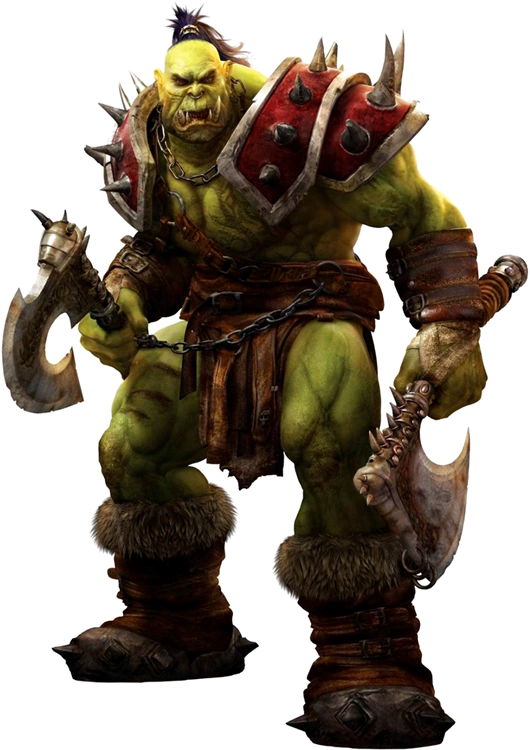
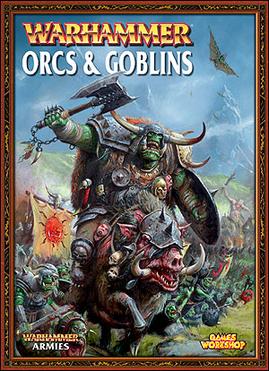
Ward & Crosby give their ORC a decidedly simian look, possibly following the work of Frank Frazetta in his Lord of the Rings portfolio 1975 but with further exaggerations - the low cranium, deep eye-sockets, sunken cheeks, no nose, extended maxilla (upper jaw) and tusks. As far as I know this is the first ever depiction of an ORC with this specific set of facial features, but it won't be the last. This look would go on to dominate the portrayal of ORCS in popular culture throughout the 80's and 90s, Citadel Miniatures mid 80s Orcs (sculpted by Kevin Adams) the Space Orks in the Waargh The Ork supplements for Warhammer 40k, and subsequently picked up by Blizzard in their Warcraft games.
 FF14 - Temple of Terror (1985) - ORC ASSASSIN by Bill Houston. Much more humanoid proportions. It might just be that he is an ORC ASSASSIN, but he reminds me somewhat of Zarak the Evil Half-Orc Assassin from the 1983 AD&D plastic toy range, Half-Orcs are MAN-ORCs in Fighting Fantasy parlance.
HALF-ORCs? one may well ask half ORC and half-WHAT? whilst usually it means "half-human" in Fighting Fantasy it could be anything, and in this case TROLL!

"Orc Charge" by Chris Achilleos - however it's publication in Out of the Pit (1985) identifies the subject matter as DORAGAR - the long haired, spiky armoured crossbreeds betwixt TROLL and ORC, so not a depiction of ORCS proper, and deserve an enquiry all of their own, whence they come from and how deviating their depictions are. It proved popular with Games Workshop who later used it twice.
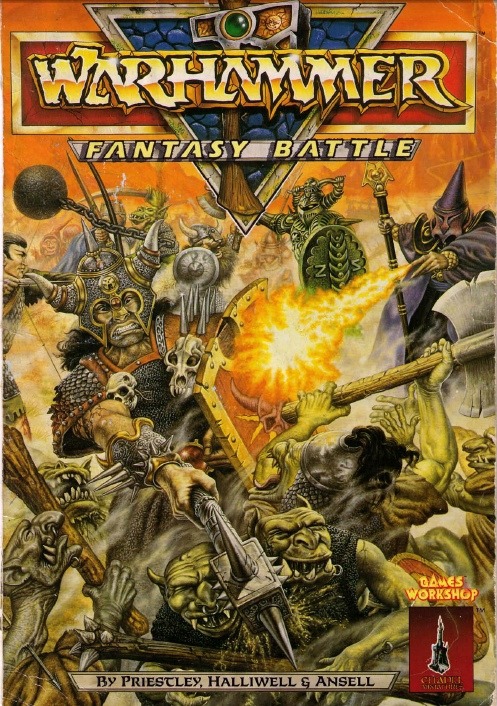
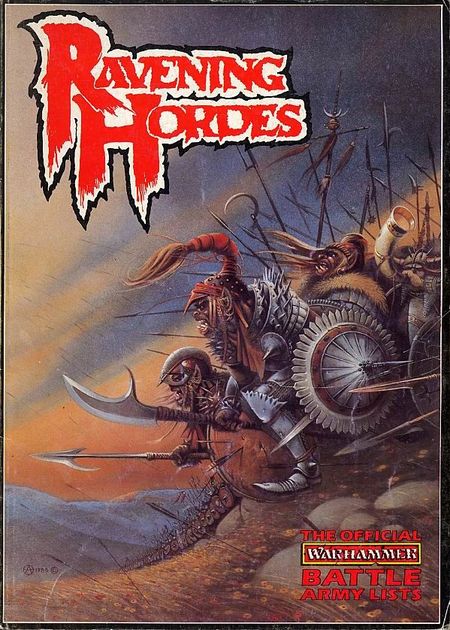
The front cover of the Ravening Hordes (1987) supplement for Warhammer Fantasy Battle
2nd Edition (by far the greatest edition of Warhammer ever).
Interestingly DORAGAR don't appear in Warhammerland at all, and we
assume they are intended to be Orcs, despite their dissimilarity with
the designs of Warhamer Orcs, not least because they're not bright
green.
As well as the front cover of Games Workshops Roleplaying Monthly: White Dwarf #78. Art prints are available from from Chris web site I've yet to determine whether this piece was commissioned for Out of the Pit specifically as a depiction of the DORAGAR, and later renamed as "Orc Charge" to make the it more attractive for subsequent licensing, or whether Chris originally planned it as a depiction of ORCs and Marc Gascoigne or someone else involved at Puffin picked it out to illustrate the DORAGAR. Either way, according to Out of the Pit, these are emphatically not the ORCS we were looking for...
And speaking of Games Workshop, the very next incarnation of the actual Fighting Fantasy ORC is 1986 Citadel Miniatures range of 60mm Fighting Fantasy toy soldiers. Pretty much eschewing both the features of the Fighting Fantasy ORC and the contemporary ranges of Citadel Miniatures Orcs which also tended to be quite wiry. Instead we have large, hulkng, muscular beasts, slightly reminiscent of the exaggerated musculature of the He-Man action figures popular at the time, which, when painted green, give the impression of the Incredible Hulk with a monkey head, which can only be a good thing!

The 60mm Citadel ORCs can also be seen as drawn by Dave Andrews in an advert for the range in the 1986 Citadel Journal, alongside SKELETONS, GOBLINS and OGRES. Dave brings his characteristic bold graphic look to the models. The whole range can be seen on the Fantasy Toy Soliders Blog and well worth a look. Facially, if not physically these ORCs do carry forward many of the features of the Ward & Crosby Orc, and while the Simian-Hulk look does recur in ORCs in other places (Warcraft, Warhammer) it's a long while before it returns to Fighting Fantasy.

 Bone-throwing ORC SHAMAN and HASHAK - the ORC-GOD both drawn by Paul Bonner and both appearing in Marc Gasgoines opus Titan the Fighting Fantasy World (1987). The large-headed, tusked-simian, sunken cheekbones strongly resembles Ward & Crosby's frozen Orc in Caverns of the Snow Witch, but also retain some of the gangly, rope-muscled physique of earlier ORCs. Paul would go on to produce concept art and illustration for Citadel Miniatures in a similar vein. However we don't see this particular combination of physiology return to the Fighting Fantasy milieu.
By strange coincidence Titan signals a bit of a quite period for the humble ORC. Fighting Fantasy as a series foregoes the traditional Dungeon / Wilderness fantasy gaming setting and wanders off into more exotic locales, outer-space, under water, the mystic east and beyond for several books...

But then, the ORCs return, as do we... to Baron Sukumvits Deathtrap Dungeon in the long awaited sequel, FF21 Trial of the Champions. Here Brian Williams gives us two muscular, furry panted fellows - shades of Barry Windsor-Smiths design for Marvel comics Conan the Barbarian but Brian also takes the ORC back to Ian McCaigs rendition in Deathtrap Dungeon, with matching topknots, creating consistency with the pre-simian image of the Orc.
 Russ Nicholson follows suit with a rather crazed PYGMY ORC in FF23 Masks of Mayhem. It's one of the features of Fighting Fantasy that rather than have creatures exist in ecological niches - i.e. GOBLINS as small ORCS, there is ever increasing variety and specialisation, so instead of just ORCS, Fighting Fantasy actually has 12 ORC variants, from MARSH ORCS to SNIFFER ORCS and of course Masks of Mayhems PYGMY ORC. And that's not including the half-breeds such as the MAN-ORC or ORC-DARKELF crossbreed known as the BLACKHEARTS
One of these more exotic types turns up next...
 The vampiric BLOOD ORCS. These look like they might be half-breeds with AD&D Barbed Devils along side a more traditional vision of the ORCS...
 Alan Langfords, FF24 Creature of Havoc, whose ORC commander strikes an impressive pose. Upright, very human stance and proportions, somewhat reminiscent of the Treens from Dan Dare. It's the only instance of an ORC in Fighting Fantasy that has this very upright humanoid stance and proportions. We also get to see one of Langfords classic horned, heavily armoured Lizardmen at the back, which Alan introduced way back in FF7 Island of the Lizard King (1984).
 Dave Carsons hideous ORC in FF25 Beneath Nightmare Castle. Weird pointy head-gear and strange large watery eyes seem to make this ORC hypnotically disgusting.
 FF26 Crypt of the Sorcerer (1987) by John Sibbick. These ORCS are very much in the same mold as mid-1980s Citadel Miniatures (Sibbick had provided artwork based on Citadel Miniatures designs for Warhammer Fantasy Battle 3rd Edition and Warhammer Fantasy Roleplay 1st Edition), and indeed many of these motifs, especially the squarish jutting lower jaw can be seen to go back to Citadel Miniatures Fantasy Tribe range of Orcs and their Ral Partha forebears.
This style of ORC will return, but before that we have a detour into the world of the weird. Take a deep breath, because these ORCS are far from normal...


 FF28 Phantoms of Fear (1987) is a delve into the dreamlands of the ELVES, and Ian Millers nightmarish visions provide a perfect accompaniment for a journey into the dark and delerious realm of the elven unconscious. The ORCs here are heavily armoured spiteful looking weirdos, ornate, spiked and layered. Broad noses, ornate helmets, shaven topknot haircuts (again, on PYGMY ORCS) layered and piecemeal clothing. But where previously ORCs had been depicted as gladiators, watchmen, and grumpy layabouts, these are warriors, armed with shield, sword and mace, giving them a military edge not seen before. Ian also gives us a wonderful 3 armed MUTANT ORC for good measure.

 FF 30 Chasms of Malice (1987) Russ Nicholson returns. Again, the topknots, however these ORCS are a more human proportioned type with a more muscular physique, gone are Russ's aged, bulbous nosed and lanky limbed layabouts, instead these ORCS are toothy grinning, semi-simian fellows with more purpose and malice about them. Their costume remains a combination of patchwork armour and ornament, leaving behind Ian Millers heavy armour and getting their bare arms out in proper ORC style.
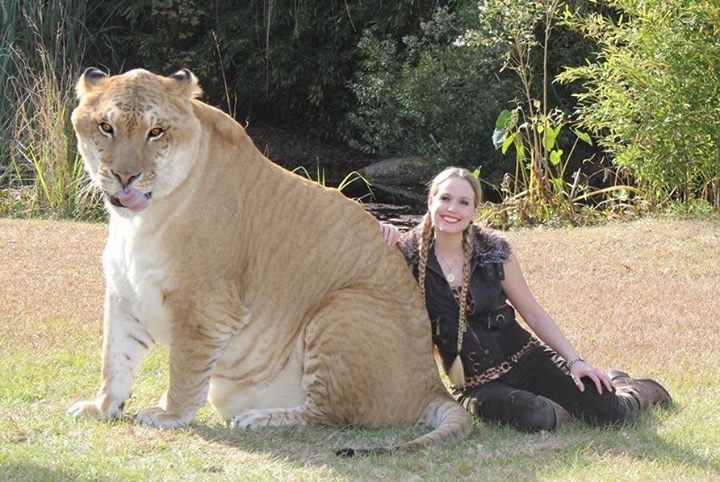
 Alan Langsford returns in FF31 Battleblade Warrior (1988) - his ORC SHAMAN looks on while what looks like a horned BLOOD ORC drinks from a normal ORC corpse. The face of the shaman looks something of a Liger whilst it's good to see the animal-pelt headdress remains from Paul Bonner original, it's a shame the leopard print kilt seems to have vanished.

FF34 Stealer of Souls brings us yet more ORC goodness from the pen of Russ Nicholson. It seems he has adopted the simian faces, rather than the Russ's signature wrappings and heavy ornamentation. Its a convergence of styles that is going to stay around for a while.
 FF36 Armies of Death Nick Williams. The human proportioned, round head, small nose physiology continue. This is the second image of an ORC with a large mallet like hammer.

Then, Chris Achilleos returns with his cover for The Trolltooth Wars (1989) entitled "Orc Hero" Again, this piece can be purchaed from Chriss website as an Art Print. It features a bodybuilder-esque ORC fighting a SKELETON. The Orc has a scimitar and a curved knife - popular weapon choices.

 MUTANT ORC complete with tentacle and crab hands.
 David Gallagher, in FF39 Fangs of Fury, FF41 Master of Chaos (1990)and FF43 Keep of the Lich Lord (1990) who apart from the Tusker, the boar-headed orc, but the heavy bottom-lipped, bald-headed fellow follows very much the same human-proportioned, muscular design as established by John Sibbick, Russ Nicholson and Nick Williams. There is also at least one other one by David which I've missed the image of, with a top-knot once again reinforcing its relationship with the ORC. The Boar-headed fellow, while clearly some form of MUTANT ORC ties the Fighting Fantasy Orc into the Ploobian Orc genus, with it's genetic heritage in Chinese folklore, Disney movies and Star Wars. Moving swiftly on, without getting too side-tracked...

Thanks to Kelvin Green for noting that I'd originally missed this one...

Les Edwards original cover for 1984s FF#8 Caverns of the Snow Witch (incidentally, available as an art print from Les site) very much in line with what Ian McCaig had set out in Deathtrap Dungeon, with topknot, small pointy nose and athletic physique.This ORC however, is kitted out with piecemeal leather and studded armour, and some natty tiger-skin pants. Similar to original Warlock of Firetop Mountain that has a different depiction of Zagor on the cover than the internal art, the internal depiction of the ORC doesn't quite follow the same vision...

Ward & Crosby give their ORC a decidedly simian look, possibly following the work of Frank Frazetta in his Lord of the Rings portfolio 1975 but with further exaggerations - the low cranium, deep eye-sockets, sunken cheeks, no nose, extended maxilla (upper jaw) and tusks. As far as I know this is the first ever depiction of an ORC with this specific set of facial features, but it won't be the last. This look would go on to dominate the portrayal of ORCS in popular culture throughout the 80's and 90s, Citadel Miniatures mid 80s Orcs (sculpted by Kevin Adams) the Space Orks in the Waargh The Ork supplements for Warhammer 40k, and subsequently picked up by Blizzard in their Warcraft games.

 |
| Zarak via |
HALF-ORCs? one may well ask half ORC and half-WHAT? whilst usually it means "half-human" in Fighting Fantasy it could be anything, and in this case TROLL!

"Orc Charge" by Chris Achilleos - however it's publication in Out of the Pit (1985) identifies the subject matter as DORAGAR - the long haired, spiky armoured crossbreeds betwixt TROLL and ORC, so not a depiction of ORCS proper, and deserve an enquiry all of their own, whence they come from and how deviating their depictions are. It proved popular with Games Workshop who later used it twice.
 |
| Ravening Hordes |
 |
| White Dwarf 85. Still not ORCS tho. |
As well as the front cover of Games Workshops Roleplaying Monthly: White Dwarf #78. Art prints are available from from Chris web site I've yet to determine whether this piece was commissioned for Out of the Pit specifically as a depiction of the DORAGAR, and later renamed as "Orc Charge" to make the it more attractive for subsequent licensing, or whether Chris originally planned it as a depiction of ORCs and Marc Gascoigne or someone else involved at Puffin picked it out to illustrate the DORAGAR. Either way, according to Out of the Pit, these are emphatically not the ORCS we were looking for...
And speaking of Games Workshop, the very next incarnation of the actual Fighting Fantasy ORC is 1986 Citadel Miniatures range of 60mm Fighting Fantasy toy soldiers. Pretty much eschewing both the features of the Fighting Fantasy ORC and the contemporary ranges of Citadel Miniatures Orcs which also tended to be quite wiry. Instead we have large, hulkng, muscular beasts, slightly reminiscent of the exaggerated musculature of the He-Man action figures popular at the time, which, when painted green, give the impression of the Incredible Hulk with a monkey head, which can only be a good thing!
 |
| via the wonderful Fantasy Toy Soliders Blog |

The 60mm Citadel ORCs can also be seen as drawn by Dave Andrews in an advert for the range in the 1986 Citadel Journal, alongside SKELETONS, GOBLINS and OGRES. Dave brings his characteristic bold graphic look to the models. The whole range can be seen on the Fantasy Toy Soliders Blog and well worth a look. Facially, if not physically these ORCs do carry forward many of the features of the Ward & Crosby Orc, and while the Simian-Hulk look does recur in ORCs in other places (Warcraft, Warhammer) it's a long while before it returns to Fighting Fantasy.


By strange coincidence Titan signals a bit of a quite period for the humble ORC. Fighting Fantasy as a series foregoes the traditional Dungeon / Wilderness fantasy gaming setting and wanders off into more exotic locales, outer-space, under water, the mystic east and beyond for several books...

But then, the ORCs return, as do we... to Baron Sukumvits Deathtrap Dungeon in the long awaited sequel, FF21 Trial of the Champions. Here Brian Williams gives us two muscular, furry panted fellows - shades of Barry Windsor-Smiths design for Marvel comics Conan the Barbarian but Brian also takes the ORC back to Ian McCaigs rendition in Deathtrap Dungeon, with matching topknots, creating consistency with the pre-simian image of the Orc.

One of these more exotic types turns up next...


This style of ORC will return, but before that we have a detour into the world of the weird. Take a deep breath, because these ORCS are far from normal...


FF34 Stealer of Souls brings us yet more ORC goodness from the pen of Russ Nicholson. It seems he has adopted the simian faces, rather than the Russ's signature wrappings and heavy ornamentation. Its a convergence of styles that is going to stay around for a while.


Then, Chris Achilleos returns with his cover for The Trolltooth Wars (1989) entitled "Orc Hero" Again, this piece can be purchaed from Chriss website as an Art Print. It features a bodybuilder-esque ORC fighting a SKELETON. The Orc has a scimitar and a curved knife - popular weapon choices.


 |
In FF 44 The Legend of the Shadow Warriors (1991) we meet another tribe of unruly ORCs - the Black Scorpions of Witchteeth Mountains, illustrated by Martin McKenna, but showing a lot of influence from Paul Bonners orcs - the shaman dressed almost exactly as the earlier illustration in Titan, and the figures in the back seem to me to bear something of a similarity to some of Pauls work in the Warhammer 40,000 supplement Waargh the Orks (1990).

FF 54 The Legend of Zagor (1993) illustrated again, by Martin McKenna, but slightly less squat and bow legged, although he is sat down whilst enjoying a tasty rat. Apparently there's a lot of sitting around if you're an ORC in Fighting Fantasy land....


Ian McCaig's Casket of Souls! (1987) both Legend of Zagor and Casket of Souls are set in Ian Livingstones world of Amarillia rather than the traditional Titan where most Fighting Fantasy is set.But nonthless, the bald, snub-nosed, wide-mouthed ORC is very much in evidence.


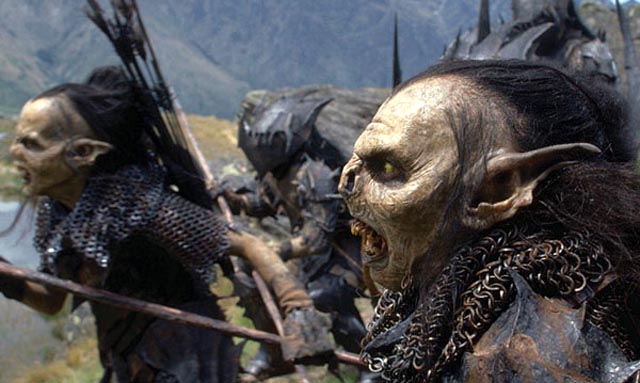 |
| ORCS in Peter Jacksons adaptation of The Lord of the Rings |

Gavin Mitchell's forthcoming comic-book adaptation of Steve Jacksons Fighting Fantasy Novel The Trolltooth Wars. The HELLHOUND handler is a HILL GOBLIN and the large, hulking creature in the background is supposed to be an ORC (if I'm not mistaken, it could be a green OGRE) who appears very much in the Simian-Hulk vein that can be seen in the Fighting Fantasy 60mm figures, and is recognizably following last seasons World of Warcraft and Warhammer ORC imagery. I say "last seasons", as the ORCs in the Warcraft movie seem to not be green any more, and Warhammer got blown up or something.
The representation of the ORC in Fighting Fantasy never really rests or settles. Each artist brings their own predilections, influences and ideas of what an ORC may be like, and the world of Titan embraces it. Occasionally the artists follow the popular design of the times, occasionally they strike out on their own, occasionally they build upon previous Fighting Fantasy imagery and occasionally they completely reinvent it. Unlike the videogames and movies of today Fighting Fantasy didn't have a team of concept artists sit down and define the look of everything, instead Fighting Fantasy grew, piece by piece, ORC by ORC. Many of the illustrations are classic, ORC-defining pieces of imagery in their own right. There are distinct trends, recurring motifs and patterns in the design, suggesting deviating genetic branches, loops and whorls and subcultures of ORC.
We could try to fit the changes in the ORC to a grand historical narrative - exotic cultural motifs such as the top-knot giving way to more generic bestial features, or a degeneration from meerly grumpy ner-do-wells to foot-soldiers of evil, yet none of these stories really hold true. While any die-hard Fighting Fantasy fan may have their favorite rendition of these ubiquitous antagonists, it is seemingly fitting for a book series that is essentially about branching stories, that there seems to be no linearity in the historical narrative of the Fighting Fantasy ORC. Indeed it seems to return to a precodified view of monsters, where goblins, hobgoblins, fae, giants, elves and orcneas weren't strictly delineated groups as Gary Gygax proposed in his Monster Manual but instead sifting folkloric symbols for supernatural experiences and ideas that defy strict categorisation.
In pulling together this history, it has been hard to draw a line between it and other representations of ORCs - many of the artists who drew for Fighting Fantasy also had connections to Games Workshop and Citadel Miniatures, Russ Nicholson having supplied illustrations that served as designs for many of their earliest ranges, Paul Bonner, Ian Miller, John Sibbick and David Gallagher would all provide artwork for Games Workshop as concept art or based on their miniature designs (many features of which directly echo Tom Meiers earlier "Giant Goblin" designs for Ral Partha), which, when we consider that the first ever fantasy miniature produced was an ORC ME1 Man-orc with Sword from Minifigs Mythical Earth range, sculpted by Dick Higgs in 1972 it seems not unreasonable to extend the circle of enquiry ever further.
 |
| Minifigs Man-orc with Sword |
And when we consider Fighting Fantasy's inaugral visualiser Russ Nicholson was active in Tolkien fandom (providing illustrations for the Anduril zine back in 1975) and the near universal availability of Tolkien imagery, we inevitably find the tangled roots of the Fighting Fantasy ORC claw us back to the dark origins of the modern ORC to be found in the writings of J.R.R. Tolkien, and the artwork inspired by it.
Nontheless, what Fighting Fantasy did was to encapsulate the ORC (and arguably many other fantasy archetypes) for a time and space, a time when for many kids, The Warlock of Firetop Mountain (which, after all, has sold two million copies) or Deathtrap Dungeon (topping the childrens best-seller list) encapsulated the ORC ZEITGEIST, create it's own, unique take on the monster and thrust him into unsuspecting homes, schools, libraries and imaginations where he had never trod before.